Leopard gecko essentials: hides, controlled heat, and a manageable routine
A small lizard still needs a thoughtfully arranged habitat. Compare everyday usability before decorative extras.
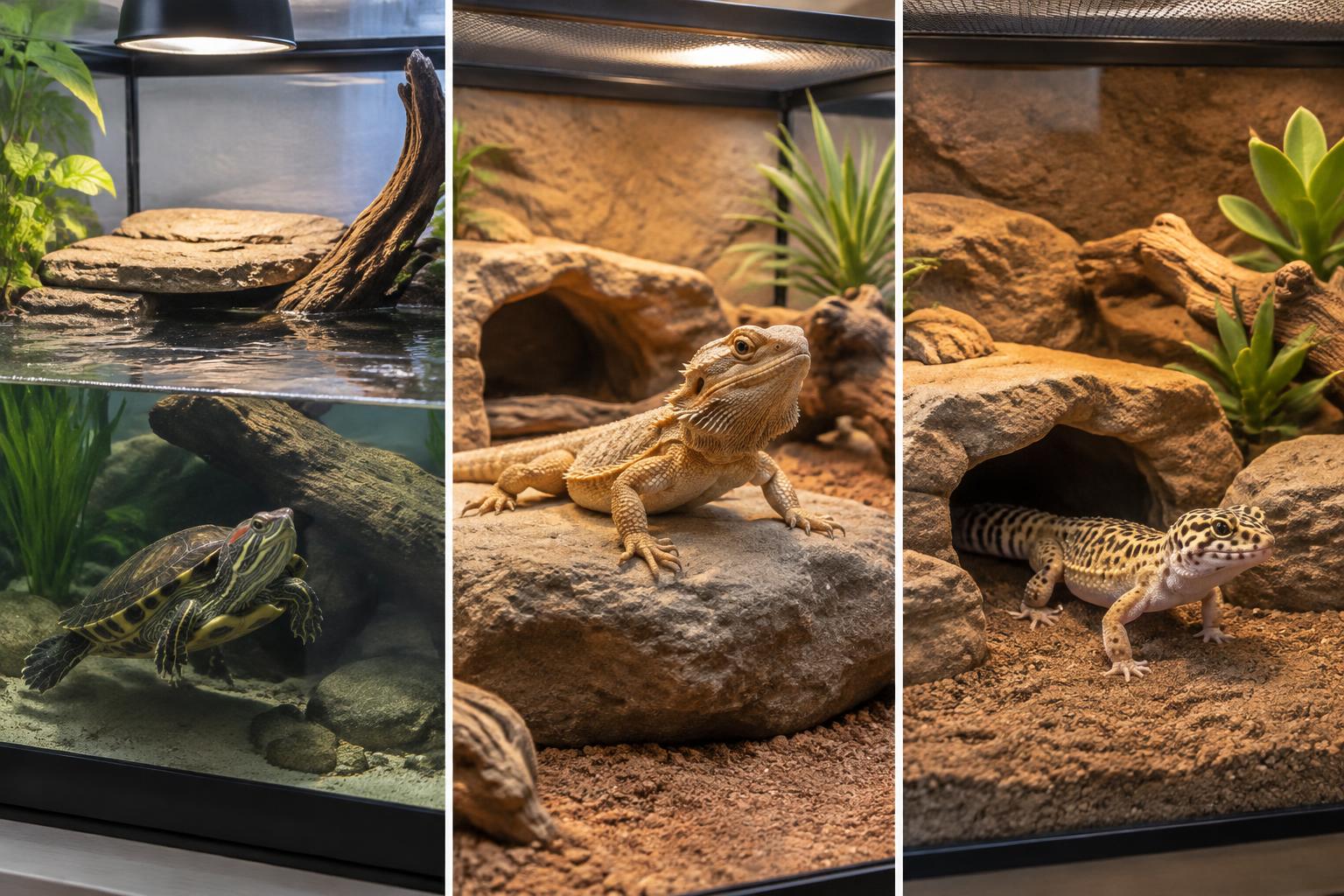
Provide choice, not one exposed resting place
Compare an enclosure with enough usable floor space for warmer and cooler areas, secure hides, and easy cleaning. Include a suitable humid hide to support shedding, following species-specific guidance. A humid hide is a local microclimate, not a reason to keep the entire enclosure damp. Check hide openings and stability so the gecko can enter safely without becoming trapped.
Use compatible heat controls and independent checks
Match the thermostat or controller to the chosen heat source and follow installation instructions. Measure the relevant surfaces and cooler area separately rather than trusting a setting on a dial. Avoid hot rocks and exposed or poorly controlled heating equipment. Discuss appropriate lighting and UVB with a reptile veterinarian; a bearded dragon’s lighting setup is not automatically suitable for a leopard gecko.
Pick a substrate you can maintain safely
Loose material can be swallowed during feeding. Ask your reptile veterinarian about substrate suitability rather than assuming “natural” means safe. Compare cleaning access, hygiene, traction, and whether a surface can snag toes. Keep furnishings stable and inspect the habitat routinely instead of leaving hidden debris beneath decorations.
Count recurring care costs
Plan for appropriate live food, supplementation guidance, replacement supplies, electricity, cleaning, and veterinary care. Compare feeding tools and dishes for cleaning and access, not exaggerated convenience claims. Follow an age- and health-appropriate nutrition plan; an accessory cannot establish the correct diet.
Know when equipment is not the answer
Problems with shedding, reduced appetite, unusual lethargy, or other changes warrant veterinary advice. Do not pull retained skin or use a product as a substitute for assessment. Follow CDC handwashing and habitat-cleaning guidance even when the gecko appears healthy.
Sources to explore
CDC: reptiles and amphibians ↗
Research-based guidance, not hands-on testing or a verified product ranking. General information, not veterinary advice. Safety disclaimers · Affiliate disclosure
Questions or corrections? hello@mypetpulse.com