Bearded dragon essentials: build the habitat before bringing them home
Start with usable space, measured temperatures, and appropriate UVB—not a shopping cart full of decorations.
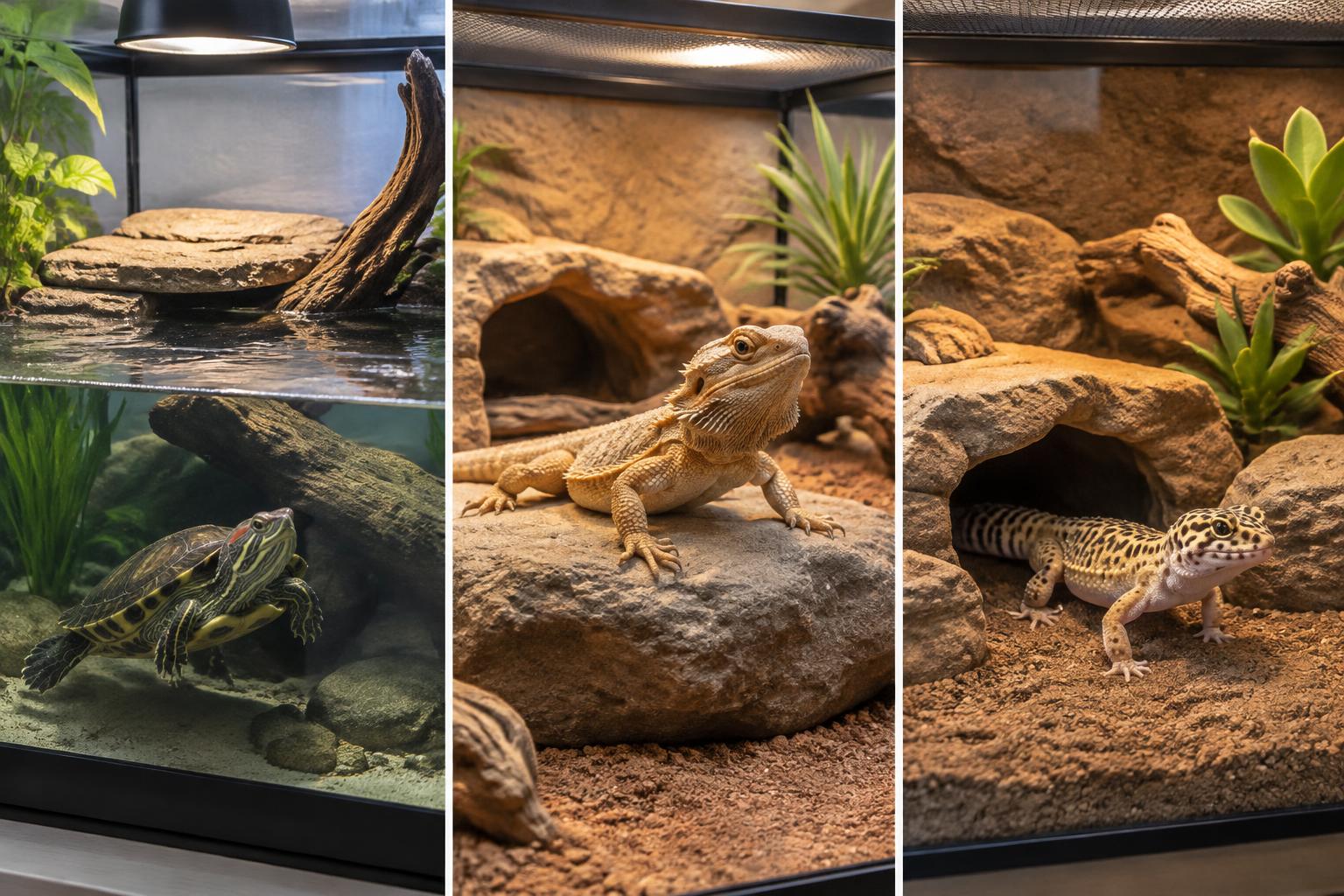
Plan room for an adult and a thermal gradient
Choose an enclosure that supports adult movement, secure furnishings, ventilation, and separate warmer and cooler areas. A single temperature reading does not describe the whole habitat. Check species-specific targets with a reptile-experienced veterinarian, then measure the basking area and cooler zone with suitable tools. Run the equipment and verify the setup before the animal arrives.
Compare UVB and heating equipment separately
Bearded dragons need appropriate UVB and a suitable thermal environment. A lamp’s warmth does not prove its UVB output. Compare a species-appropriate UVB source, compatible fixture, secure mounting, and manufacturer instructions for distance and barriers. Replace lighting according to the exact product guidance; visible light alone does not show that UVB output remains adequate. Select heating controls compatible with the heat source rather than improvising.
Choose substrate and furnishings deliberately
Compare surfaces for cleaning, traction, and the risk of ingestion. Substrate suitability depends on the animal and husbandry; ask a reptile veterinarian rather than assuming a bag marked “reptile sand” suits every setup. Avoid accessible heated rocks and unstable heavy furnishings. Provide suitable shelter and ensure basking furniture cannot shift onto the animal.
Feeding equipment is not a nutrition plan
Easy-to-clean dishes, appropriate insect containment, and safe feeding tools can make care easier. They do not determine the correct diet or supplementation. Age and health affect feeding needs; agree on a species-appropriate routine with your veterinarian. Compare recurring food, supplement, lighting, and veterinary costs before choosing a starter bundle.
Make hygiene part of the routine
Wash hands after handling the dragon or equipment, and keep the animal away from kitchens and food preparation areas. Follow CDC advice for cleaning and higher-risk household members. If appetite, movement, or appearance changes, seek veterinary advice rather than buying a gadget as a treatment.
Sources to explore
VCA: housing bearded dragons ↗
CDC: reptiles and amphibians ↗
Research-based guidance, not hands-on testing or a verified product ranking. General information, not veterinary advice. Safety disclaimers · Affiliate disclosure
Questions or corrections? hello@mypetpulse.com