An aquatic turtle habitat: buy for the adult, not the tiny hatchling
Clean water, a dry basking space, appropriate lighting, and room to grow matter more than a decorative starter kit.
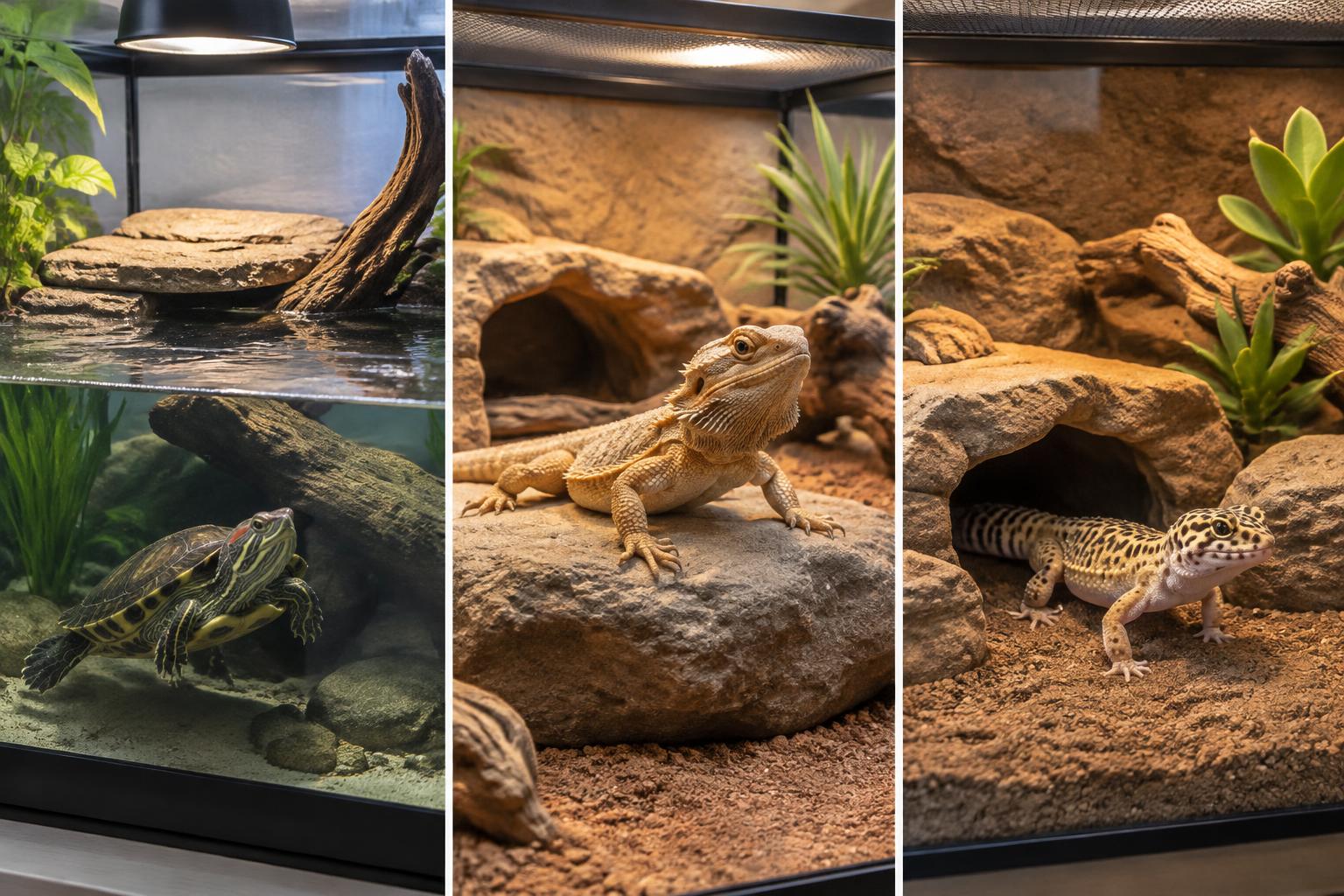
Identify the species before choosing the enclosure
An aquatic turtle is not a tortoise, and different turtle species have different swimming, basking, diet, and space needs. Ask a reptile-experienced veterinarian about your species and its expected adult size before buying. Compare usable water volume, swimming room, a secure lid where appropriate, and access for cleaning. A small hatchling can outgrow a starter enclosure; plan the adult habitat and its weight before placing it on furniture.
Build a dry basking area and check both heat and UVB
Provide a stable area where the turtle can climb out of the water and dry off completely. Compare platform size, load capacity, ramp access, and whether it can tip or trap the animal. Heat and UVB are different requirements: a bright or warm lamp does not necessarily supply appropriate UVB. Follow species-specific guidance and the exact lamp instructions for distance, barriers, fixtures, and replacement. Do not guess output from how bright the bulb looks.
Choose filtration you can actually maintain
Compare filters for the actual water volume and turtle waste load, not just the tank label. Look for accessible media, replacement supplies available in the US, and clear cleaning instructions. Filtration does not remove the need to check water quality and perform appropriate water changes. If the species needs heated water, compare a suitable protected aquarium heater with independent temperature measurement and the manufacturer’s installation instructions.
Budget for the habitat, not just the turtle
Include the adult enclosure, support stand, basking platform, lighting fixtures, replacement bulbs, filtration, water testing, cleaning supplies, electricity, and veterinary care in your budget. Favor equipment with clear manuals and available spare parts over an unverified “everything included” promise. Product prices and suitability vary; verify the exact US model before purchasing.
Keep people safe around the habitat
Healthy-looking turtles can carry Salmonella. Wash hands with soap and water after contact with the animal, tank water, or equipment. Keep the habitat and cleaning supplies away from food preparation areas. Follow CDC advice about cleaning and higher-risk household members; reptiles are not recommended for households with children younger than five, adults 65 and older, or people with weakened immune systems. Never release a pet turtle into the wild.
Sources to explore
VCA: housing aquatic turtles ↗
CDC: reptiles and amphibians ↗
Research-based guidance, not hands-on testing or a verified product ranking. General information, not veterinary advice. Safety disclaimers · Affiliate disclosure
Questions or corrections? hello@mypetpulse.com